


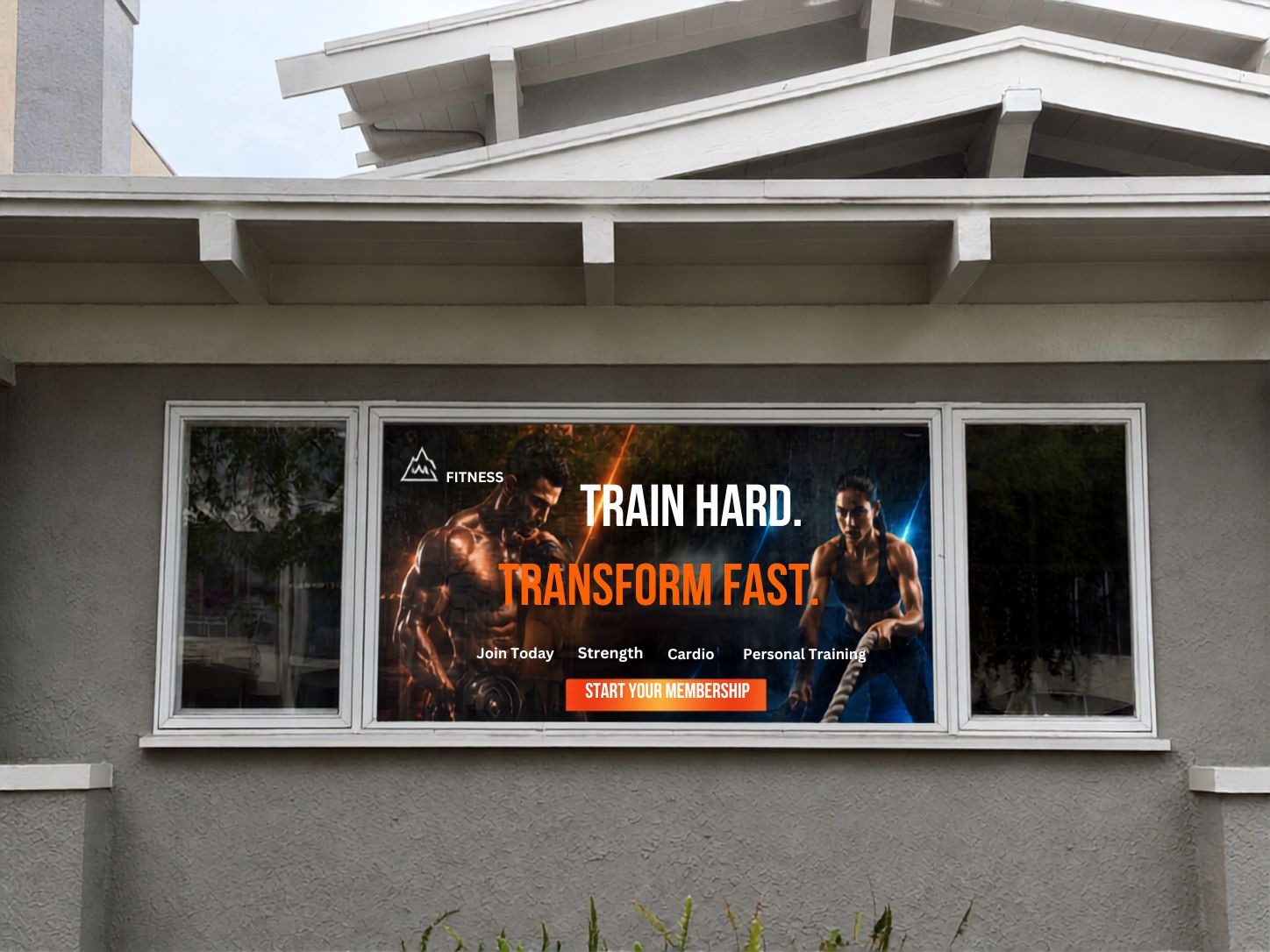
Walk through a modern shopping district in 2026 and you will notice something changing: storefronts are becoming more than windows.
For decades, retail businesses relied on printed posters, vinyl graphics, mannequins, and traditional signs to attract people passing by. These methods still have their place, but consumers are now surrounded by digital content everywhere they go. As a result, retailers are looking for new ways to capture attention without completely blocking the storefronts that showcase their products.
That is where transparent LED displays are changing the game.
Transparent LED technology allows businesses to transform glass windows and architectural surfaces into dynamic digital advertising spaces while maintaining visibility through the glass. Instead of choosing between a clear storefront and a powerful digital display, businesses can increasingly have both.
Why Retail Advertising Is Changing
The modern customer is exposed to thousands of marketing messages every day. A static poster may communicate an offer, but it cannot change instantly, play video, respond to different campaigns, or create the same visual movement as a digital display.
Retailers therefore need advertising that is:
- Visually engaging
- Easy to update
- Flexible for different campaigns
- Suitable for modern architecture
- Capable of displaying video and animation
- Designed to attract attention from passing customers
Digital signage is already becoming an important part of modern retail environments. Industry research and 2026 trends show that retailers are increasingly using connected displays, video, personalized content, and data-driven signage to improve customer engagement.
But traditional digital screens can create a problem when installed in storefronts: they can block the view into the store.
Transparent LED technology approaches the problem differently.
What Is Transparent LED?
Transparent LED is a display technology designed to allow light and visibility to pass through the display while simultaneously showing digital content.
Instead of installing a large opaque television or LED wall behind a window, transparent LED can be integrated with the glass itself or positioned across a glass surface.
The result is a unique combination:
A storefront by day. A digital advertising canvas when you need it.
This makes transparent displays particularly interesting for retail stores, restaurants, showrooms, shopping centers, real estate developments, and other businesses where glass is already an important architectural feature.
Turning Store Windows Into Digital Advertising Space
One of the biggest advantages of transparent LED is that it can turn unused window space into a marketing asset.
Imagine a fashion retailer preparing for a seasonal campaign.
With traditional printed graphics, the business might need to design, print, install, and eventually remove physical signage.
With a digital display, the same window can show:
Monday: New collection
Tuesday: Limited-time promotion
Wednesday: Product video
Thursday: Brand story
Friday: Weekend sale
The content can change without replacing the physical signage.
This flexibility gives retailers considerably more freedom when planning campaigns.
Transparent LED vs. Traditional Storefront Advertising
Traditional storefront advertising is usually static.
Once a poster or printed graphic has been installed, changing it requires another physical installation. This can become expensive and time-consuming when campaigns change frequently.
Transparent LED provides a different approach.
Traditional SignageTransparent LED
Static images
Video and animation
Physical replacement
Digital content updates
Limited campaigns
Multiple campaigns
Uses printed materials
Reusable display
Blocks some visibility
Maintains transparency
Limited scheduling
Scheduled content
One message at a time
Multiple messages
The biggest difference is flexibility.
A digital storefront can become a constantly changing communication channel rather than a fixed advertisement.
Why Transparency Matters
A storefront is not just advertising space.
It is also an important part of the customer's perception of a business.
Retailers spend significant resources creating attractive interiors, displaying products, and designing welcoming environments. Covering the entire window with an opaque screen can reduce that visual connection.
Transparent display technology addresses this challenge by allowing digital content to coexist with the physical environment.
This is particularly valuable for premium retail, fashion stores, automobile showrooms, restaurants, hotels, and architectural spaces where maintaining an open and modern appearance matters.
The broader display industry is increasingly exploring transparent technologies specifically because businesses want digital impact without sacrificing architectural openness.
The Rise of Dynamic Storefront Content
Another major trend in 2026 is the move from simple scheduled signage toward more intelligent and responsive content.
Modern digital signage platforms can connect displays with data sources such as inventory, promotions, time of day, weather, and other business information. This means the content displayed to customers can become more relevant to the situation.
For example, a restaurant could display breakfast promotions in the morning, lunch specials around noon, and dinner promotions later in the day.
A clothing store could promote summer products during warm weather and shift toward seasonal collections as conditions change.
The storefront becomes more than a screen.
It becomes a flexible communication platform.
AI Is Making Digital Signage Smarter
Artificial intelligence is also becoming increasingly important in digital signage.
Instead of creating one piece of content and showing it continuously, businesses can use intelligent systems to determine which content should be displayed and when.
AI-powered signage can potentially use factors such as:
- Time of day
- Weather
- Customer behavior
- Inventory
- Location
- Campaign performance
- Store traffic
This creates opportunities for more personalized advertising.
For example, a retailer could automatically prioritize a specific promotion during a period when relevant products are available and change the content when inventory levels change.
The industry is moving toward screens that respond to information rather than simply playing a fixed video loop.
Transparent LED Film: A Flexible Solution for Existing Glass
For businesses that already have glass storefronts, replacing the entire window structure may not be practical.
This is where LED Film technology can be particularly useful.
LED Film can be applied to existing glass surfaces, allowing businesses to upgrade their storefront without completely redesigning the architecture.
For retailers, this can mean:
- Faster installation
- Less disruption
- Preservation of existing glass
- Flexible display configurations
- Dynamic digital advertising
- A modern storefront appearance
Digital Film Marketing's LED Film solution is designed around this concept, offering a way to transform existing glass into a digital display while maintaining transparency.
LED Glass for New Construction and Premium Projects
For new construction and major architectural projects, LED Glass provides another option.
Rather than retrofitting an existing window, transparent LED technology can be incorporated into the design of the building itself.
This can be especially attractive for:
- New retail developments
- Shopping centers
- Luxury stores
- Corporate buildings
- Hotels
- Showrooms
- Architectural façades
The result can be a seamless combination of architecture and digital media.
Instead of adding a screen to a building, the building itself becomes part of the display.
The Storefront Is Becoming a Digital Marketing Channel
The biggest shift is not simply the introduction of a new type of LED technology.
It is the changing role of the storefront.
A window used to be primarily a physical display area.
Today, it can become a marketing channel.
A retailer can use the same physical space to promote products, announce events, tell brand stories, launch campaigns, display social content, and create visual experiences.
And unlike printed signage, the content does not have to remain the same.
That means businesses can react faster to promotions, seasons, events, and changing customer interests.
What Retailers Should Consider Before Installing Transparent LED
Transparent LED is powerful, but choosing the right solution requires more than simply selecting a screen.
Businesses should consider:
1. Window Size
The dimensions of the glass determine the appropriate display configuration and resolution.
2. Viewing Distance
A display viewed from several feet away requires different specifications from one viewed from across a street.
3. Ambient Light
Storefront displays need to remain visible in different lighting conditions, particularly when exposed to strong daylight. High-brightness technology is increasingly important for window-facing displays.
4. Transparency
Businesses should balance display visibility with the amount of natural light and interior visibility they want to maintain.
5. Content
A beautiful display cannot compensate for poor content. Videos should be designed specifically for the viewing distance, screen dimensions, and environment.
6. Installation
The display should work with the existing architecture rather than becoming an obstacle to customers, employees, or merchandise.
The Future of Retail Windows Is Digital
Retail is not moving completely away from physical stores.
Instead, physical stores are becoming more connected, interactive, and digitally enhanced.
Transparent LED technology sits directly at the intersection of physical architecture and digital marketing.
It allows retailers to maintain the openness of glass while adding motion, color, video, promotions, and brand storytelling.
As digital signage continues to become smarter and more connected in 2026, transparent displays are positioned to play an increasingly important role in modern storefront design.
The future storefront may not have to choose between a beautiful window and a powerful digital advertisement.
It can be both.
Your glass can be more than a window. It can be your next digital marketing channel.